
Articles
See All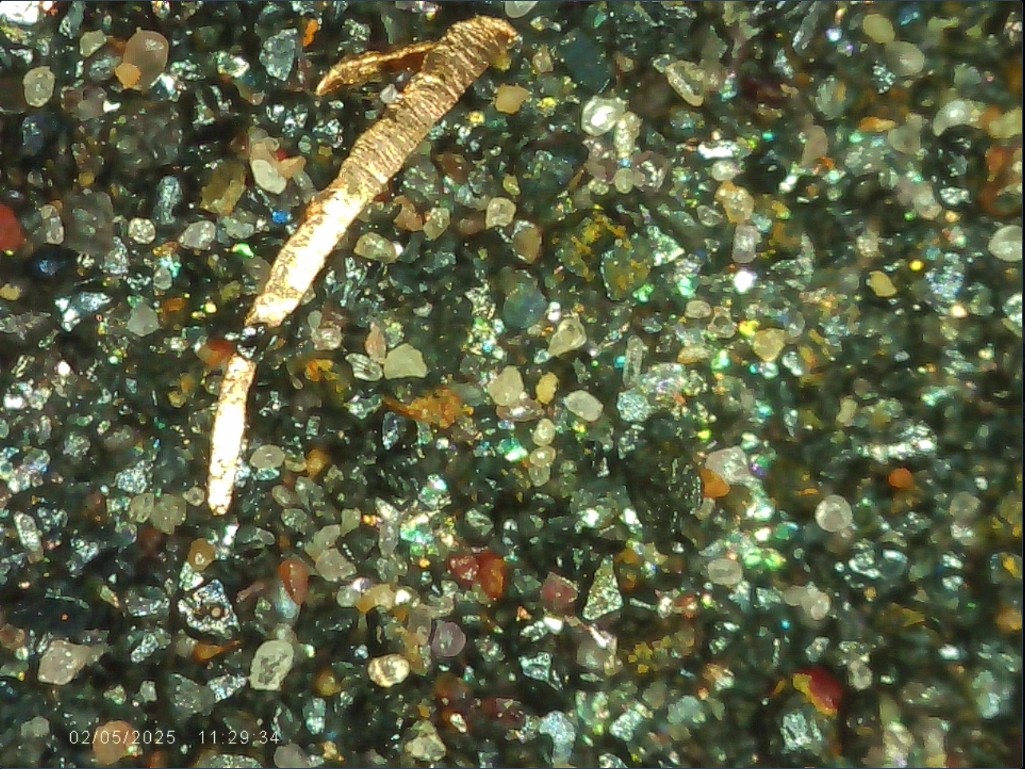
This Huge Gold Exploration Play Is Starting to Prove Up
Canary Gold’s latest work at the Madeira River Project is important because the company has now moved beyond just having a “theory” about paleo channels carrying gold — they are finally starting to prove the concept with both visible gold and lab-confirmed gold assays.
The market has probably been frustrated by the slow pace of drilling and the lack of headline-grade results, but after listening carefully to geologist Jon Hill’s interview and reviewing the latest exploration update, the story is actually progressing in a fairly logical sequence for a project of this scale.
Here’s the simplified version of what’s happening.
The Big Idea: A Giant Ancient River System
The Madeira River is already known as one of the richest placer gold rivers in Brazil. Since the 1970s, miners have recovered large amounts of gold directly from the active river.
Canary’s thesis is simple:
- The river we see today is NOT where the river always flowed.
- Over tens of thousands — possibly millions — of years, the river wandered back and forth across a massive valley.
- Every time the river changed course, it left behind old buried river channels (“paleo channels”).
- Those old channels could contain concentrations of gold-bearing gravels similar to — or potentially richer than — the modern river.
This is NOT just ONE isolated channel. The company controls roughly 1,500 square kilometers of land and believes there could be many ancient river systems crossing the property.
That’s the real scale investors need to understand.
This is not a single vein discovery story.
This is more like trying to map an ancient buried river network across a giant basin.
What Has Canary Actually Proven So Far?
This is where the story has quietly improved.
Step 1: They Found the Right Sediments
Initially, Canary drilled shallow holes looking for ancient river gravels.
They identified:
- rounded quartz grains
- heavy mineral sands
- mature river sediments
- geological structures consistent with paleo channels
Those are exactly the kinds of sediments you expect in ancient gold-bearing river systems.
Step 2: They Started Seeing Visible Gold
The next breakthrough was visual confirmation.
The company began recovering visible gold from drill samples taken inside these buried channels.
That matters because:
- it proves gold is actually present in the paleo channels
- it validates the geological model
- it shows the system is mineralized
At that point the company had geological evidence — but not yet lab confirmation.
Step 3: Lab Assays Confirmed Gold
The newest press release is important because Canary finally received assay confirmation from laboratory concentrates.
Hill described this as the first “chemical and validatable evidence” that the buried paleo channels contain gold.
The grades reported so far are not spectacular.
But I would stress that:
- these are very early samples
- they come from only a tiny number of drill holes
- the company is still learning the geometry of the system
- the current holes are shallow and widely spaced
In other words, the company is still effectively proving the existence of the mineralized river system itself.
Why the Drilling Has Been So Slow
This is probably the biggest source of shareholder frustration.
Investors see only ~1,300–1,600 meters drilled after months of work and assume something is wrong.
But the issue appears mostly technical.
The original auger drilling system simply could not penetrate the deep, water-saturated sediments effectively.
The company had to:
- test multiple drilling methods
- modify rigs
- move to more powerful reverse-circulation/core systems
- adapt to difficult wet ground conditions
This has delayed progress A LOT.
But it also led to a major realization:
The paleo channels may be deeper than originally thought—down to 60 meters, not just 30 meters.
The Most Important New Development: Going Deeper
This may actually be the biggest takeaway from the interview.
Originally, Canary was mainly testing down to around 30 meters depth.
Now they are drilling:
- 50 meters
- 60 meters
- possibly 70+ meters
And it’s possible that the full paleo channel system may ultimately extend to depths of roughly 100 meters or more.
Why does that matter?
Because in placer systems:
- deeper gravels are often more mature
- heavier gold particles can settle lower in the system
- the bottom contact of a paleo channel can contain the richest concentrations
In a quick interview after the press release, consulting geologist Jon Hill specifically noted they are beginning to encounter:
- more mature gravels
- rounded sands
- ilmenite-heavy mineral zones
- sedimentary characteristics similar to productive upstream deposits
Those are encouraging geological indicators.
Why This Is a Massive “3D Puzzle”
Hill repeatedly described the project as a “3D puzzle.”
That’s because the company is trying to determine:
- where the ancient river channels flowed
- how many channels exist
- how wide they are
- how deep they are
- where the highest gold concentrations settled
Unlike a hard-rock gold deposit, this is not a simple vein you can trace.
The ancient river may:
- split
- reconnect
- migrate
- stack on top of older channels
- widen and narrow unpredictably
So Canary is effectively trying to reconstruct the behavior of a giant ancient river system buried beneath sediments.
Why the Market May Be Missing the Story
Hill made an interesting comment during the interview:
“The story is so simple people don’t believe it.”
That’s actually a fair point.
The thesis itself is straightforward:
- a gold-rich river moved around for geological ages
- ancient channels should still contain gold
- Canary controls huge land positions where those channels likely passed
The difficulty is not understanding the idea.
The difficulty is proving:
- continuity
- depth
- thickness
- grade distribution
- economic recoverability
That simply takes time and drilling.
What Happens Next
The next major milestones are likely:
- Deeper Hole Results
The company now wants to confirm that deeper, more mature gravels contain increasing gold concentrations.
That would materially strengthen the thesis.
- Define Continuous Gravel Horizons
They need to show that the gold-bearing channel sediments extend over meaningful distances — not just isolated spots.
- Step-Out Drilling
Hill mentioned 1-kilometer step-outs followed by tighter-spaced infill drilling if successful.
This is critical because scale is everything here.
- Bulk Sampling Eventually
If the channels prove continuous, the project may eventually require bulk sampling rather than conventional drilling alone.
That’s common in placer-style deposits because:
- gold distribution can be uneven
- large-volume processing matters more than ultra-high grades
The Closest Analogy
Hill compared the concept to:
- mineral sands operations
- potash-scale sedimentary mining
- large alluvial systems in Colombia
This is important because the economics here may ultimately resemble:
- very large tonnage
- relatively low grade
- low stripping
- simple physical recovery methods
rather than a traditional underground hard-rock gold mine.
Bottom Line
Canary Gold still has a long way to go before proving an economic deposit.
But the project has clearly advanced from:
- “interesting geological theory”
to:
- confirmed paleo channels
- visible gold in drilling
- lab-confirmed gold assays
- deeper channel discovery
- evidence of mature gold-bearing gravels
The pace has been slow because the company is essentially inventing and adapting an exploration method for a very unusual deposit type.
The real bet here is not on one drill hole.
It’s on whether Canary ultimately proves that multiple buried Madeira River channels cross its enormous land package — and whether those channels contain economically recoverable placer gold concentrations over very large areas.
That’s why this remains highly speculative — but also why the upside could be very large if the geological model keeps validating.