
Articles
See All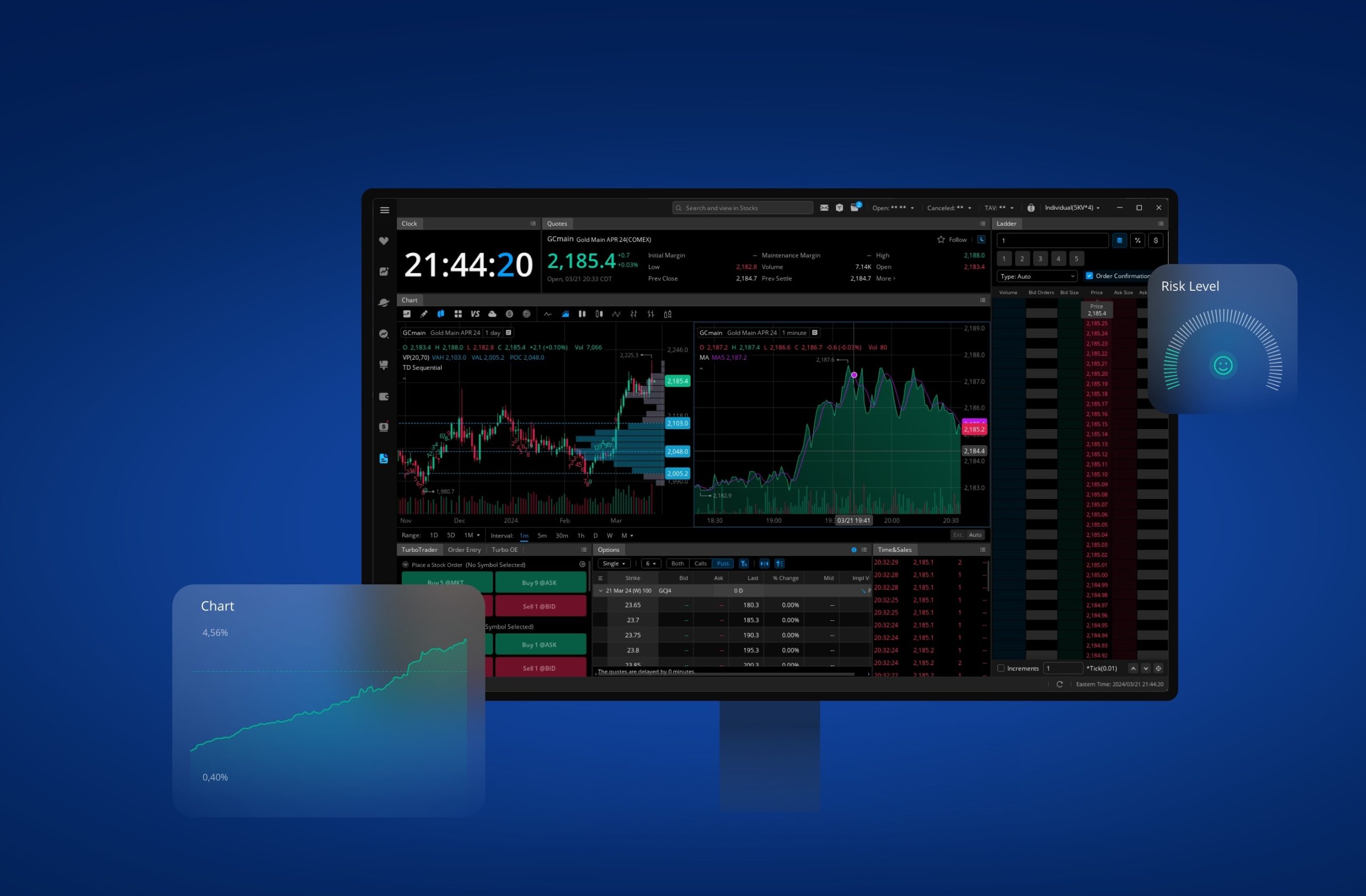
Stick With The Leader or Buy Second Best? WEBULL (BULL-NASDAQ)
QUICK FACTS
Trading Symbols: BULL
Share Price Today: $8.50
Shares Outstanding: 457.3 million
Market Capitalization: $3.87 Billion
Cash:
Debt:
Enterprise Value: $3.599 Billion
Betting On Second Best?
“Best-of-breed” It is the mantra of Jim Cramer and a golden rule for many investors: stick to the #1 business in a sector and ignore the rest.
In THIS case I agree with Cramer. The best companies usually stay #1. Just look at the Mag-7.
But sometimes the performance between the best and #2 is so stark that you gotta give the runner-up a second look.
That’s the case for Webull (BULL – NASDAQ), a $4.5 billion market cap. Webull’s stock performance has been anemic compared to its much larger competitor Robinhood (HOOD – NASDAQ) at $120 billion.
Since Webull de-spac’ed in April, Robinhood is up 150% (it’s actually a 20 bagger in 2 years!) while Webull is down.


Source: Stockcharts.com
Does the market have this right? As I show at the bottom, BULL is a lot cheaper than HOOD on many metrics, and the last quarterly showed revenue up 55% but opex only up 13%–is scale really starting to kick in NOW?
In starting my research, I downloaded the Webull app and played with it for the last few days.

Source: Webull.com
This isn’t just a usable product. It is a slick and well-designed app that was clearly made with the trader in mind. There isn’t anything “new”; no feature I hadn’t seen before, but everything you’d expect is there, and it is laid out in a sensible way.
And the tools are fast. You move from quote to chart to income statement overview seamlessly. I did not make a trade, I didn’t deposit cash, but as far as the interface and information packed into the app – it’s well done.
You can make your watchlist, drill down into the chart, the news, a high-level view of what analysts are thinking. There are alerts for earnings, news and technicals.
I was impressed. Yet I am NOT the target audience here.
Heat maps, speedometers and bar charts aren’t really my thing. I prefer filings, balance sheets and cash flow statements, which isn’t what Webull is about.
The reviews on the app are generally pretty good too.

Source: Google Play Store
How does this compare to Robinhood?
Robinhood is the “easy button” of stock trading. It is geared toward the newbie. It makes trading easier (Robinhood boasts just 3-taps to make a trade).
Webull has more bells and whistles – more research capabilities, more customization.
Some of the reviews say Webull is clunkier than Robinhood, but “clunky” wasn’t my experience.
The “research” here is still basic. You get charting tools, technical tools, alerts and “visualized” financial statements (that means income statements and balance sheets highlights in pie charts and bar charts).
We aren’t talking about a true research platform. No transcripts or SEC filing searches.
The question is this: can Webull come from behind on research depth and bells and whistles or whether Robinhood’s head start is insurmountable.
What’s The Growth Like
Webull is growing. But how much Webull is growing, well, that’s complicated.
First, we have to distinguish between Webull’s two user buckets: registered users and funded accounts.
· A registered user of Webull is someone that has downloaded the app and registered an account.
· A funded account is someone that has deposited cash and held a non-zero cash balance for at least 45 days in a row.
Anyone can be a registered user if you download the app and open it. I was a registered user. But because I didn’t deposit any money, I wasn’t a funded account.
There is a BIG difference in the growth of registered users and funded accounts.

Source: Webull Q3 Investor Presentation
Webull has almost 26 million registered users. Less than 20% of those are funded accounts.
Funded accounts are also growing just single digits (9% last quarter), while registered users are growing twice that.
What’s going on here?
There are a couple of things playing into this.
Reason #1: When Webull launched in 2017, it wasn’t a brokerage app. Webull was “market data platform” – a fancy way of saying it was competition to Yahoo Finance! which was going downhill at the time.
Webull was launched to do what, not surprisingly, it does best: provide real-time quotes, charting and news quickly – just like Yahoo before they ruined it.
Reason #2: Webull invests in a lot in marketing to bring in top of funnel users.
Webull’s marketing spend as a percentage of revenue has averaged 20% this year, while Robinhood has been just 8% (which is actually up from 6% in 2023-24).
Some of this is just because of Webull’s smaller size, they averaged an even higher 40% last year, but still they are focused on bringing in users and most of those start at the free level.
Reason #3: Also trying to target sign-ups, Webull offers a lot of things for free:
1. “Professional-grade” charting
2. Real-time quotes
3. Technical analysis
Webull is aggressive about promoting paper-trading. They let users create practice accounts with fake dollars that can be used to buy and sell “fake” securities. It’s a trading simulator, and it doesn’t necessarily bring dollars into accounts.
The concern with all of this is that these free users aren’t converting as fast as I’d like to see. Free-users have been increasing at 1 million per quarter for a year now, but registered users are going up at 1/10th that rate.
One obvious reason for this is that conversion is hard. It is a hassle to deposit cash.
That is no fault of Webull. They have the same requirements to onboard accounts as everyone else – which mean know your customer requirements and ID verification.
A second concern is that they aren’t keeping all the funded accounts they bring in. In Q2 Webull added 144,000 funded accounts but they also had 100,000 go inactive. I’m not really sure why?
The good news is that customer assets have been trending up, especially in the last couple of quarters.

Source: Webull Q3 Investor Presentation
Webull recently brought its crypto arm, called Webull Pay, back in-house into the main ecosystem. That added $1.2B of assets overnight. But even still, after flatlining over 3 quarters, Webull added $3.3B and then $4.1B of assets in Q2 and Q3.
Webull’s net deposits, which are new funds coming into the platform as opposed to just gains, were up $2.1B in Q3.

Source: Webull Q3 Investor Presentation
This isn’t just luck. Webull has been actively trying to bring in higher-value customers.
They rolled out WeBull Premium in March 2025, which is intended to capture a higher-value audience.
Premium pays 3.6%-4% interest on uninvested cash. You get Level 2 and OPRA data (real time option pricing). Webull also offers matching on IRA funds of 3.5% and discounted trading prices. The service costs $3.99/month or $40/year.
This is direct competition to Robinhood’s own Robinhood Gold service, which offers a similar uninvested cash return, the same IRA matching and a similar fee.
Webull has also added features like future trading and index options intended to attract a higher net worth trader.
They even started to add corporate bond trading, which is absolutely NOT going to attract your “stonk” trader.
The result? Even with tepid funded account growth, revenue is anything but. Q3 revenue was up 55% year-over-year.

Source: Webull Q3 Investor Presentation
Kalshi– Getting Into Gambling
The other piece of this story is the low-end customer. The one who is on the app to, for lack of a better term, gamble.
I’m talking about prediction markets, basically gambling on a binary outcome or event. Things like short-term crypto-price moves (e.g. over/under on Bitcoin or Ethereum), economic-data outcomes, and event markets like political races and sports.
The biggest player in the space is Kalshi, and Webull has them onboard their platform. It could turn out to be a huge win.
Kalshi and Webull became partners in February 2025. Webull integrated some of Kalshi’s products into their app. That included short-term binary “event contracts” such as S&P 500 and Nasdaq hourly bets.
In Q3 Webull expanded what they offered. They added sports prediction markets for NBA/NFL/NASCAR.
They called out sports betting on the call because it was growing so fast.
Webull did 30 million contracts in October. They expect 100% month-over-month growth going forward for the next number of months.
The transaction growth opportunity here is real. As is the opportunity to bring on new users to the platform. On the call, President Anthony Denier said they were tapping into a whole new TAM of customer.
But it isn’t necessarily a big revenue driver, unless it grows A LOT. Remember, Webull is essentially a reseller. They give their own user-base access to Kalshi.
Webull only gets a penny per trading contract and a small exchange rebate from Kalshi. The entire take to WeBull is 1.25c to 1.50c per contract on the revenue side.
At such a low take-rate, it will take a lot of growth to drive this into meaningful revenue. A 100 million contract per month at 1.5c per contract is $1.5M of revenue or $4.5M over a full quarter. Which is a nice boost, but on Webull’s run rate it isn’t going to make a huge dent.
China Discount?
Webull was founded in 2016 by a Chinese born entrepreneur Wang Anquan (Anquan Wang), who previously worked at Alibaba Group, one of China’s largest technology companies In its early years, Webull received funding from Chinese investors, most notably Xiaomi (the large Chinese electronics and internet company)
BUT Webull states that U.S. user data is stored on U.S.-based servers. The U.S. brokerage is regulated and examined by U.S. authorities. And unlike Chinese internet platforms, brokerage firms are heavily supervised.
That said, some U.S. policymakers and investors remain cautious.
Are We Bullish on Webull?
Here’s the real bear case is for Webull: this is a cyclical business.
It is the same bear case you see for Robinhood, that was all over X.com when the stock drew down from $150 to $100 last month.
We kinda forget sometimes that markets can go down and stay down. Bear markets, real bear markets, do happen.
While Robinhood and Webull are red hot right now, it will change quickly if the market goes south. User growth will slow, volume will decline, and funds will drop.
In fact, we got a little glimpse into how skittish investors are. Early this week, Robinhood announced that their funded customers dropped 130,000 month-over-month. That news sent the stock down 10% on the day.
The second strike against Webull is that it is so much smaller than its peers. This is a bet on the underdog.
Interactive Brokers: $500 Billion+ in customer equity.
Robinhood: $200 Billion in customer assets.
Webull: $16 Billion in customer assets.
Of course this could be a positive to the growth story if Webull can scale faster — like how high-growth technology stocks trade at premium multiples before profitability.
One last negative. Webull has a dual class share structure. Webull founder Andy Wang controls the voting power.
This is common in tech (Meta, Google), but for a smaller financial firm with roots in China, it’s a risk. SNAP – NASDAQ has languished for years largely because of their dual-class structure.
While that’s three strikes, we aren’t playing baseball. Webull has several things going for them.
Webull operates in many markets (U.S., U.K., Hong Kong, Singapore, Australia, South Africa, Japan, Mexico, Brazil, Canada…) and claims millions of users worldwide. They have a better global reach than Robinhood.
On their Q3 call management said that their international businesses was growing by more users per month than the US business – this from a much smaller base.
Robinhood is effectively a domestic US company. They aren’t even in Canada yet!
In Q3 Webull entered into a strategic partnership with Meritz Financial Group to offer U.S. market access to Meritz’s customers in South Korea. I’m not sure I understand the South Korean investing phenomenon, but they seem to love their stocks.
Second, Webull’s ties to crypto are weak.
Robinhood makes a lot of money off of crypto. It’s a bit of a hidden driver for their business, and one that isn’t without risk. Their poor funded account numbers in November were almost certainly linked to crypto users.
Webull is getting back into Crypto, but this is hardly a big business for them.
Third, many of Webull’s new initiatives, the one’s I’ve gone over like Premium, the betting markets, the added trading options, are all very new. We haven’t seen their full impact yet.
Finally, Webull is also A LOT less expensive than Robinhood on just about every metric.

Source: Webull and Robinhood Financials
Look, Webull has a good product. I tried it, it’s a slick interface. The consensus is that this is a quality app.
That and their growth, their new features, their international presence, all paint a bullish picture for me.
The big caveat is what I said at the start: you must believe this bull market will continue.
Because Webull, just like Robinhood, is a cyclical business. And it will have a cyclical downturn—if we ever get another prolonged downturn in stocks.
If not, I can’t see the market ignoring this name much longer.